Heartworm Treatment
and Support for dogs and cats
Heartworm Treatment
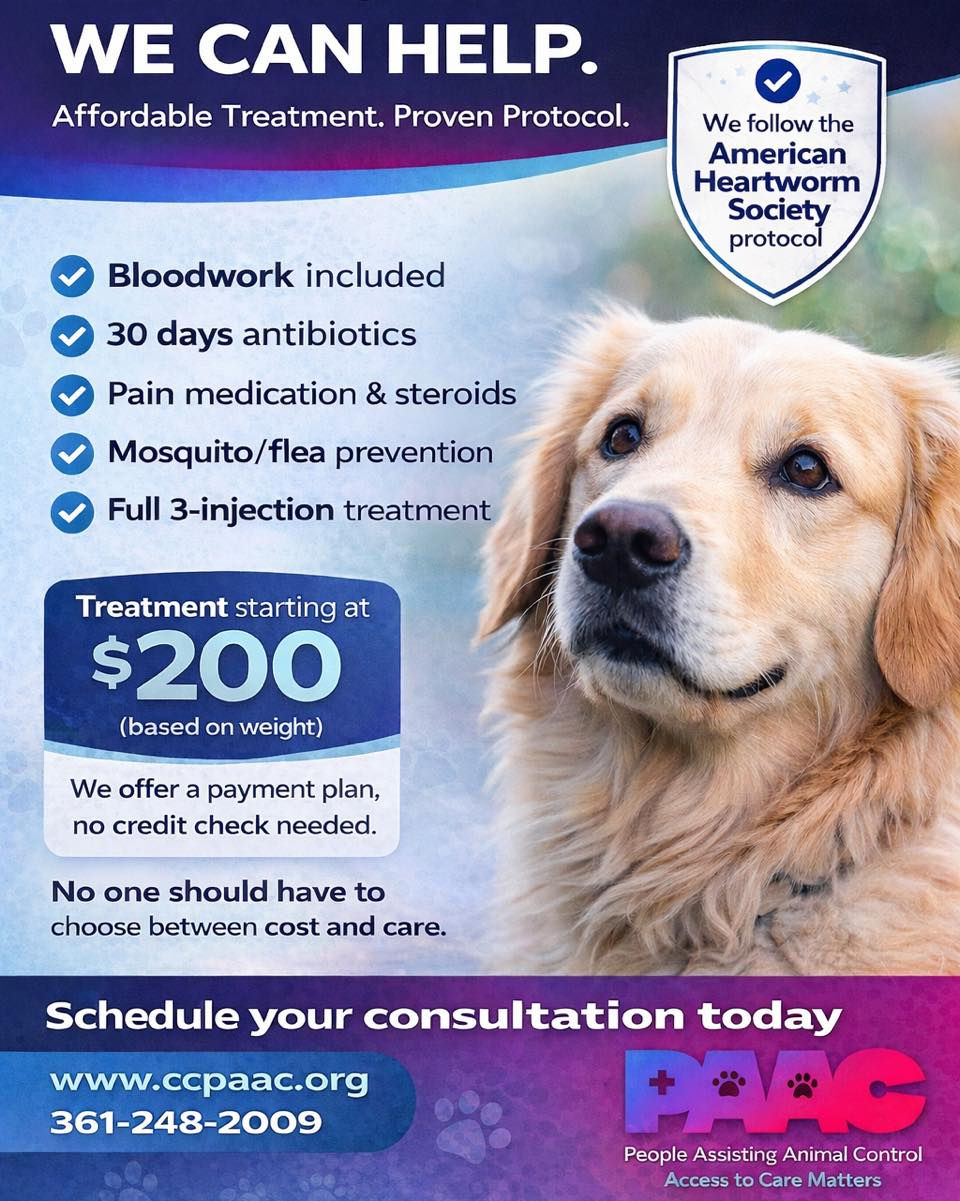
At PAAC, we provide heartworm treatment following the gold-standard guidelines of the American Heartworm Society. Heartworm disease is a serious and potentially fatal condition caused by parasites transmitted through mosquito bites. Without treatment, it can lead to irreversible damage to the heart and lungs—and in many cases, death.
Our team is committed to helping your pet recover safely and comfortably.
We also offer flexible payment plans and free consultations to ensure every pet has access to lifesaving care. Early treatment greatly improves your dog’s chances of a full recovery—schedule your free consult today.

Your Cat Has Tested Positive for Heartworms on the IDEXX Triple Test
What does this mean?
Your cat has tested positive for heartworms, which means there is at least one adult female heartworm present in the blood vessels between the heart and lungs. In cats, even one or two heartworms can cause serious health problems.
Unlike dogs, there is no approved treatment that completely cures heartworms in cats. However, there are important steps that can help manage the disease and improve your cat’s quality of life.
Recommended Treatment and Care:
-
Start your cat on monthly heartworm prevention for life.
Many heartworm preventatives also protect against fleas and other parasites. -
Start a 30-day course of antibiotics.
Your veterinarian may prescribe oral liquid doxycycline or minocycline once daily for 30 days. -
Monitor your cat for symptoms.
Signs of feline heartworm disease may include:
• Vomiting
• Coughing
• Difficulty breathing
• Low energy
• Decreased appetite -
Prednisolone may be prescribed if your cat develops symptoms.
This medication helps reduce inflammation in the lungs and breathing passages. The dosage is usually started higher and slowly reduced to the lowest amount needed to control symptoms. -
Emergency medication may be sent home.
You may receive a syringe with an emergency glucocorticoid medication to use only if your cat has a severe breathing crisis at home. This medication is intended to help stabilize your cat while you immediately transport them to a full-service veterinary clinic. -
Schedule a follow-up appointment with PAAC.
Please contact PAAC to schedule an appointment with one of our veterinarians to discuss your cat’s condition, treatment plan, and long-term care.
Important:
Cats with heartworms can decline quickly if breathing problems occur. If your cat is struggling to breathe, seek emergency veterinary care immediately.
Your treatment plan includes the following:
Day 0: Start doxycycline for 30 days. Prednisone will be given if symptoms such as coughing are present.
Complete bloodwork and start on heartworm prevention if not already on it. We will apply topical flea &
tick mosquito repellent (included in price). Owner can use bravecto if preferred at their expense.
Day 30: Come by clinic to get topical flea/tick/mosquito repellent applied.
Day 60: 1st melarsomine injection, mosquito/flea/tick repellent application and veterinarian will send
home steroids and pain medication.
The interval between day 60 and 90 can be up to four months apart.
Day 90: 2nd melarsomine injection, mosquito/flea/tick repellent application and veterinarian will send
home steroids and pain medication.
Day 91: 3rd melarsomine injection
Day 270: Retest for heartworms at owner’s expense. If positive, retest in three months.